
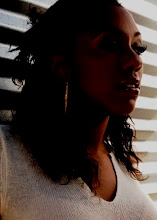

I absolutely adore the music and style of Sri Lankan rapper/singer M.I.A. She is one of the most creative artists out there in my opinion. Her music blends all different styles seamlessly to create something entirely new. It seems that with the warm reception she received form the critics as well as the hip-hop community, that her music would be more popular among urban and inner city youth who like hip-hop.
At first, I thought maybe her music was just too weird for some people. It is very different, and in L.A. where I live the hip-hop community doesn’t really listen to much electronic music, unless it’s co-signed or performed by an acceptable hip-hop artist. Since M.I.A.’s music contains so many electronic elements, this seemed like a good reason.
Recently, I watched a short documentary on M.I.A. by acclaimed director Spike Jonze. In it, M.I.A. stated that she felt like hip-hop had always come from the perspective of urban and inner city youth in America and the UK, and her music spoke to a completely different kind of experience-the experience of a refugee from a third world country. She seemed to imply that their experience is nothing like that of people growing up in poor communities in developed countries.
This statement kind of blew my mind. There it is, I thought, that’s the reason she’s not as popular in the African-American community. She doesn’t seem to understand that the differences between living in poverty in the United States as a minority and being a refugee from a third world country are much fewer than the similarities. African Americans may not be refugees, but we were brought to this country against our will, enslaved for nearly 400 years, and then legally treated as second class citizens. We experienced an unprecedented level of racism, the remnants of which are still evident today.
The separation of families during slavery all but destroyed our concept of family structure, our African heritage and culture was forcefully stripped away from us. We have struggled, fought, and died for rights as simple as drinking from water fountains and riding on busses. Everyday in the black community there is genocide, and evidence of self-hatred. Many black people consider the definition of beautiful to be lighter-skinned with “good hair” and of course this description does not fit the majority of black people.
I don’t love M.I.A. any less, because much of what se said was true. I can’t imagine what it must be like to live in a third world country, and I’m glad to hear an intelligent, thought-provoking voice speaking out about the injustices the people there face, but in the words of Martin Luther King Jr., “injustice anywhere is a threat to justice everywhere” and we are experiencing severe-albeit different-injustice in the inner city communities of America.
To only focus on the differences is to marginalize the problem. Poverty, genocide, and racism are not third-world issues, they are world issues. We may not see the effects of the third world on America directly, but that doesn’t mean there aren’t any.
I want to walk down Crenshaw and hear somebody bumping M.I.A. I want to go to Hollywood to a popular night club and hear “World Town” blaring from the sound system and hear everyone singing along. I want everyone to have a little more substance to go with their style, and M.I.A. definitely has both. But until her music is a reflection of both experiences, hinged upon their similarities and not quite so hung up on the differences, I don’t think it will happen. I will, however, be listening and hoping.


